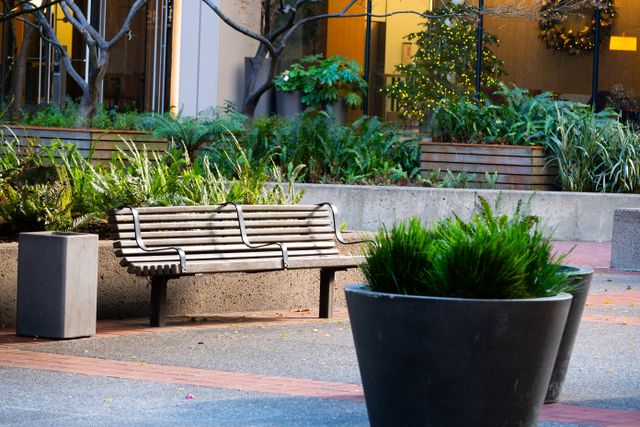
Melbourne has a real hotbed of specialist buy street furniture Melbourne makers in the southeast and inner suburbs think family-owned businesses in Mordialloc as well as big engineering outfits churning out stuff for major council developments. Buyers range from the City of Melbourne and Port Phillip councils to private commercial outfits kitting out restaurant forecourts and university campuses. The sort of support that Melbourne manufacturers offer like on-site measurement, delivery and installation is what matters for buyers who don’t have the internal resources to sort out logistics themselves.
JND Outdoor Furniture, out of Mordialloc, focuses on custom stuff for councils and hospitality, drawing on over a decade of experience to do residential, commercial and public space projects. The Urban Design Group has been making streetscape furniture for over sixty years, with an in-house design team and a big fleet of delivery trucks catering to the metro area. TRJ Engineering Group, with twenty years experience of custom fabrication, has got the preferred supplier stamp of approval from the City of Melbourne, City of Perth, and councils like Monash, Kingston and Port Phillip it’s not just small players that operate in this market either; you get family owned businesses and large manufacturing groups both trying to make a play the key difference often comes down to how responsive and flexible they are on smaller or nonstandard orders.
Custom Fabrication vs Off-the-Shelf: Which Way for Your Project?
Off-the-shelf catalogue stuff is perfect for quick-turnaround projects and standard civic installations where speed and budget certainty are what really matter you don’t need to worry about design specificity. But custom fabrication becomes a necessity when the project dimensions, finish specs or surrounding design context are just a bit too bespoke for a standard catalogue item. Most Melbourne manufacturers can do both switching between catalogue fulfilment and bespoke fabrication depending on what the brief is.
Do not underestimate how useful prototyping services are on orders that scale up a bit getting a physical sample approved before full production begins can pick up on fit and finish issues that renderings and CAD drawings often miss. Custom steel fabrication is powder-coated these days and virtually any colour can be matched, including council-specific colour palettes. When it comes to custom orders in Melbourne, you can expect a lead time of four to eight weeks that’s assuming the order is not too complex, or the workshop is not slammed but if you do go for a custom colour in powdercoat, that’s an extra two to four weeks on top of that.
Materials, Durability, and Melbourne’s Climate
The materials that dominate for Melbourne’s outdoor conditions are powder-coated steel and aluminium. Steel is great for structural rigidity and load-bearing applications; aluminium is better when you need to worry about corrosion resistance, especially near Port Phillip Bay. Then you have timber slats adding a bit of visual warmth, but you need to pick a species that can take the heat and the rain blackbutt and spotted gum are better than softwood alternatives in Melbourne’s conditions.
Composite materials are starting to get a bit more traction as a low-maintenance timber alternative. They resist fading, splintering and all the other stuff that comes with timber; plus you don’t have to oil or seal the thing. For sites in the Port Phillip Bay catchment, marine-grade stainless fixings are essential, no matter what the primary material is; throwing in some standard mild steel fixings is a common mistake that’ll leave you with rust stains and structural weakening in a few years.

The Buying Process: What to Double-Check Before Committing
Before you place an order, ask to see CAD drawings or 3D renders to make sure the product will fit with the rest of the site. This is especially important for products like seating that need to comply with accessibility requirements like Australian Standard AS 1428.2. Get the warranty agreement in writing and make sure you know what’s covered and what’s not – and which one’s a manufacturing fault vs just general wear and tear. It’s also a good idea to find out if the supplier actually makes the products or if they’re just a reseller this can make a big difference when it comes to getting things fixed if something goes wrong.
When you’re getting a quote, make sure you know what’s included and what’s not. Like, is the installation part of the deal or a separate extra cost. This is especially important if you’re doing a big precinct installation the logistics of getting everything installed can add up pretty quickly, and if you don’t factor that in, you could end up with a nasty surprise. It’s a good idea to get a complete quote that covers all the bases supply, delivery, installation and a post-installation inspection so you know exactly what you’re getting for your money. If you’re comparing different suppliers and just looking at the price per unit, you could easily end up missing out on a lot of other costs that’ll add up in the long run like if you have to do multiple deliveries or pay extra for installation.